
This section has a series of resources which focuses on breathing in humans and respiration in other organisms with 6 topic lessons. It can easily be expanded to 10 lessons with more practical time if required.
Lesson 1: Structure of Thorax & Inhalation & Exhalation
Lesson 2: Gas Exchange Surface & Tidal and Vital Capacity
Lesson 3: Aerobic Respiration & Maggot Respirometer
Lesson 4: Anaerobic Respiration
Lesson 5/6: Making Yogurt, Bread and Beer
Inside The Lungs

Now Playing
Inside The Lungs
Inside The Lungs
Now Playing
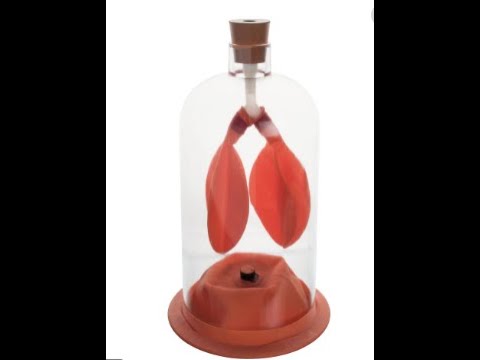
Bell jar model of the human breathing system
This video describes how the Bell Jar model of the human breathing system works to generate volume and pressure changes during inhaling and exhaling.

Now Playing
Breathing 3 - BBC Curriculum Bites

Now Playing
What Is Aerobic Respiration? | Physiology | Biology | FuseSchool
What Is Aerobic Respiration? | Physiology | Biology | FuseSchool
Respiration is the chemical process that supplies the body with energy for all other life processes: growth and repair of cells, ...muscle contraction, protein synthesis, sending nerve impulses, absorbing molecules in active transport to name just a few.
It happens in ALL living cells, not just animal cells but also plant cells.
There are two types of respiration: aerobic and anaerobic respiration. Aerobic means “with air” and so needs oxygen, whereas anaerobic respiration doesn’t need oxygen.
Aerobic respiration releases energy in cells by breaking down food substances whilst in the presence of oxygen. It is represented by this simplified equation
Glucose + Oxygen ----- Carbon Dioxide + Water + Energy.
Glucose is broken down by oxygen to release the by-products of carbon dioxide and water. Energy is released, which is then used to make a special energy molecule called ATP. ATP is how energy is stored for later use by the body. Aerobic respiration happens all the time in all cells, usually in the mitochondria.
SUPPORT US ON PATREON
https://www.patreon.com/fuseschool
SUBSCRIBE to the FuseSchool YouTube channel for many more educational videos. Our teachers and animators come together to make fun & easy-to-understand videos in Chemistry, Biology, Physics, Maths & ICT.
VISIT us at http://www.fuseschool.org, where all of our videos are carefully organised into topics and specific orders, and to see what else we have on offer. Comment, like and share with other learners. You can both ask and answer questions, and teachers will get back to you.
These videos can be used in a flipped classroom model or as a revision aid.
Find all of our Chemistry videos here: https://www.youtube.com/playlist?list=PLW0gavSzhMlReKGMVfUt6YuNQsO0bqSMV
Find all of our Biology videos here: https://www.youtube.com/playlist?list=PLW0gavSzhMlQYSpKryVcEr3ERup5SxHl0
Find all of our Physics videos here: https://www.youtube.com/playlist?list=PLW0gavSzhMlTWm6Sr5uN2Uv5TXHiZUq8b
Find all of our Maths videos here: https://www.youtube.com/playlist?list=PLW0gavSzhMlTKBNbHH5u1SNnsrOaacKLu
Instagram: https://www.instagram.com/fuseschool/
Facebook: https://www.facebook.com/fuseschool/
Twitter: https://twitter.com/fuseSchool
Access a deeper Learning Experience in the FuseSchool platform and app: http://www.fuseschool.org
Follow us: http://www.youtube.com/fuseschool
Befriend us: http://www.facebook.com/fuseschool
This is an Open Educational Resource. If you would like to use the video, please contact us: info@fuseschool.orgShow More

Now Playing
Anaerobic Respiration in the Muscles | Physiology | Biology | FuseSchool
Ever wondered why feel all stiff the day after doing lots of exercise, in order for you to contract your muscles they need the energy that is released in respiration. ...However, when you're doing heavy exercise for a long time the muscles can't always get the oxygen they need to carry out aerobic respiration. In this case the muscle cells can switch to carry out another type of respiration called anaerobic respiration. this is respiration without oxygen so why don't we just do this respiration all the time if we don't need oxygen that we don't need to bother breathing. Well unfortunately anaerobic respiration is not as good as aerobic firstly it only produces a small amount of energy compared to aerobic respiration and also it produces a nasty waste product called lactic acid.
The muscles in your forearm which control the fingers been out carrying out anaerobic respiration. After a while the lactic acid will start to build up in the muscles and it causes pain. When you stop exercising you will need to break down this lactic acid. To do this lactic acid needs to travel in the blood to deliver. Here it is broken down using oxygen into carbon dioxide and water.
After vigorous exercise, you may find you are still breathing very heavily for a time afterwards. This is to get the oxygen into the blood needed to break down lactic acid. We say after doing anaerobic respiration that you’re an oxygen debt, if you need to pay back the oxygen to the body. So, to answer the question at the start of the video, why do you feel stiff after exercise? it's all to do with lactic acid if you stop moving straight after exercise then the blood does not return to deliver and the lactic acid stays and the muscles. This is what makes them stiff the next day. So, it's very important to warm down after exercise or a gentle jog and stretching
SUBSCRIBE to the FuseSchool YouTube channel for many more educational videos. Our teachers and animators come together to make fun & easy-to-understand videos in Chemistry, Biology, Physics, Maths & ICT.
VISIT us at http://www.fuseschool.org, where all of our videos are carefully organised into topics and specific orders, and to see what else we have on offer. Comment, like and share with other learners. You can both ask and answer questions, and teachers will get back to you.
These videos can be used in a flipped classroom model or as a revision aid.
Find all of our Chemistry videos here:
https://www.youtube.com/watch?v=cRnpKjHpFyg&list=PLW0gavSzhMlReKGMVfUt6YuNQsO0bqSMV
Find all of our Biology videos here:
https://www.youtube.com/watch?v=tjkHzEVcyrE&list=PLW0gavSzhMlQYSpKryVcEr3ERup5SxHl0
Find all of our Maths videos here:
https://www.youtube.com/watch?v=hJq_cdz_L00&list=PLW0gavSzhMlTyWKCgW1616v3fIywogoZQ
Twitter: https://twitter.com/fuseSchool
Access a deeper Learning Experience in the FuseSchool platform and app: http://www.fuseschool.org
Follow us: http://www.youtube.com/fuseschool
Friend us: http://www.facebook.com/fuseschool
This Open Educational Resource is free of charge, under a Creative Commons License: Attribution-NonCommercial CC BY-NC ( View License Deed: http://creativecommons.org/licenses/by-nc/4.0/ ). You are allowed to download the video for nonprofit, educational use. If you would like to modify the video, please contact us: info@fuseschool.orgShow More

Now Playing
Yeast Aerobic and Anaerobic Respiration
Yeast is a living organism and it respires as it lives.
Yeast can undergo two types of respiration and this experiment starts off with aerobic and moves to anaerobic.
In the Anaerobic ...version which we often call fermentation it releases much less energy and produces alcohol as a by-product.
This happens in plants or fungi such as yeast.
Fermentation in bacteria also produces lactic acid as a by-product. (Yogurt)Show More

Now Playing
Cool Breads with things inside!
Cool bread today.
Experimental....
Black pudding roll
Cheese and Salami
Choc chip, brown sugar, butter
All very nice.
Experimental....
Black pudding roll
Cheese and Salami
Choc chip, brown sugar, butter
All very nice.

Now Playing
Bread Rolls, Loaf and Fougasse

Now Playing
Huge Bread baking for friends and family!
Just a double bread mix today in 31C kitchen. Pretty hot!
Now Playing
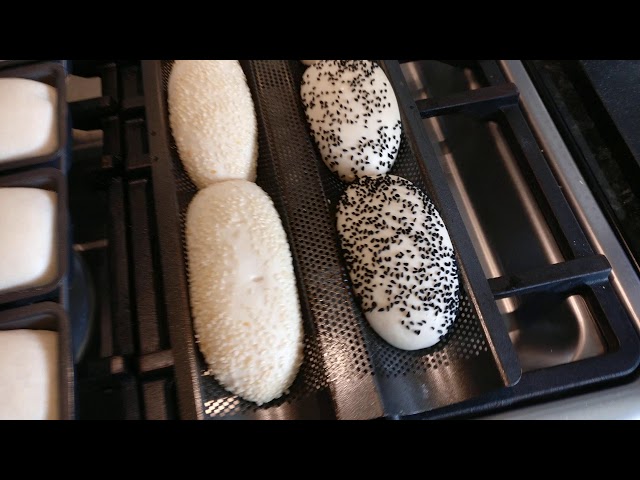
2020 Christmas Day Bread Rolls Part 1
Just baking my own bread at home again. Nice crust is always formed from a good high heat at the start, but then turn it down.

Now Playing
Christmas Prosecco Bubbles
How does pressure release a bubble of dissolved CO2?
Clearly all alcohol ferments and this may have been a flatter wine to start with and the CO2 is added afterwards.
Clearly all alcohol ferments and this may have been a flatter wine to start with and the CO2 is added afterwards.
