KS3 Chemical Reactions
This section has a series of resources which focuses on the reactions of metals to teach basic interactions with 9 topic lessons. MAZINTL and MAZIT are rather useful here!
Lesson 1: Metals
Lesson 2: Metal Properties
Lesson 3: Metal and Non-metal Oxides
Lesson 4: Metals and Water
Lesson 5: Metals and Acid
Lesson 6: Displacement Reactions
Lesson 7/8: Test and Review
Lesson 9: Metals Extraction
Interactive Quiz – Metal Reactions
Interactive Quiz – Acids and Alkalis
This is how the ionic bond forms in Lithium Oxide (Li2O).
This short flash animation looks at how the ionic bond forms in Lithium Oxide (Li2O).This is how the ionic bond forms in Lithium Oxide (Li2O).
This short flash animation looks at how the ionic bond forms in Lithium Oxide (Li2O).
GCSE Chemistry - Formation of Ions
This video covers how atoms gain or lose electrons to form ions, why they bother, and how to tell which ion they'll become.
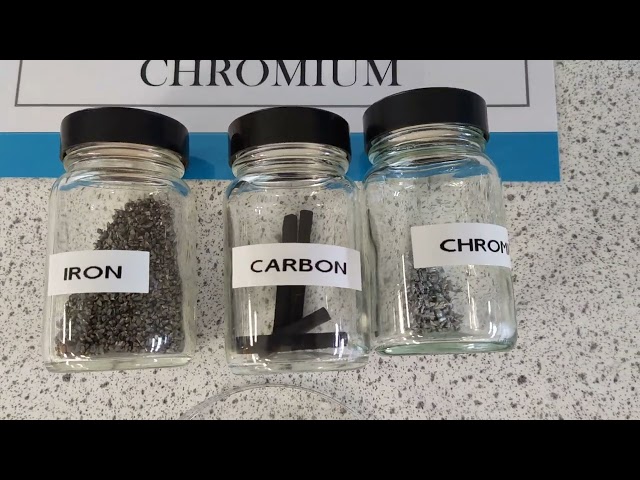
Based on AQA course, but suitable for ...all exam boards.Show More Elements make Metal Alloys - Steel Copper Zinc Brass Carbon Chromium Duralumin - KS3 Science
Cool metals combine to form an alloy. This video gives you some simple combinations
Magnesium Oxide
This video demonstrates the steps that are to be taken for the experimental determination of the empirical formula for magnesium oxide.
Magnesium Oxide - Burning Mg in O2
Magnesium Oxide - Burning Mg in O2
Sulfur burns in oxygen
Introductory chemistry demonstrations in the laboratory | Sulfur burns in oxygen with a blue flame to form sulfur dioxide |
http://www.learnscience.co.zaThe Sci Guys: Science at Home - Burning Steel Wool
Welcome to science at home in this experiment we will be burning steel wool using a 9volt battery. In this experiment we use a 9 volt battery to heat up ...the wires in a bundle of steel wool to the point that it burns. The combustion of the steel wool keeps the burning reaction going until the heat is lost or all of the steel wool has been burnt. At the end of this episode you will be able to explain what happens when the steel wool is burnt, why the steel wool burns and be able to replicate this experiment at home.
Help support us to do more experiments by becoming a patron on patreon: http://www.patreon.com/thesciguys
Equipment and Ingredients:
Steel Wool - Extra or Ultra Fine thickness
9 volt Battery
4 Aluminum Foil Tart Tins
2 Aluminum Foil Trays
Fire Extinguisher
Lab Coat or Apron
Gloves
Goggles
Previous Episode: Gravity Water Drop: https://www.youtube.com/watch?v=-EUEYStS8G4&list=PL7VnnL-CJ-z7Qel7vDRENagzLqLvo1X8i&index=18
Next Episode: Coming Soon
Check out our website for more experiments, written explanations of the steps and the material list. http://www.thesciguys.ca
If you enjoyed the video remember to subscribe, comment and like us to show us you care.
Remember to like us on Facebook: http://www.facebook.com/thesciguys
Follow us on Twitter: http://www.twitter.com/thesciguysShow More Oxidation and Rusting of a nail, water, Vaseline, calcium chloride
An Iron nail is a good example of “rusting” or oxidation. The metal will slow break down by a simple reaction on the surface which then eventually breaks away to ...leave fresh iron and process starts again.
Iron + oxygen + water ..... Hydrated Iron (III) Oxide
We can also stop this process by removing any of the reactants from the situation. When we say that the iron is oxidised, we mean electrons are removed to make a +3 ion.
See how each prevention method works or fails.Show More GCSE Chemistry - What is Corrosion and How to Stop it (2026/27 exams)
Burning copper
S2 Elements, compounds and mixtures - compounds, burning copper
The Reaction of Metals with Oxygen
An experiment demonstrating the reaction of sodium, potassium, zinc, aluminium and iron (nail, steel wool and filings) with oxygen. Some methods of increasing reaction rate are shown.
#chemistry
Metals and Nonmetals Chemical Properties Part 1 | Don't Memorise
Reactivitity of Metals with HCl - Qualitative Lab
The reactivity of six metals are qualitatively tested by adding 3M HCl. If the metal reacts with HCl it will react with H+ from the dissociation of HCl and ...make Hydrogen gas (bubbles) and the metal chloride. The spontaneity of the reaction will be done by observing the production of hydrogen gas.Show More Railroad thermite welding
Rail thermite welding in Storfors, Sweden.
Schienenschweissen in Storfors, Schweden
Rälssvetsning på Inlandsbanan i Storfors
Permanent link to this article: https://www.animatedscience.co.uk/ks3-chemical-reactions